Order Before 14:00 = Shipped Today *

Your Cart
Your cart is empty
Continue Shopping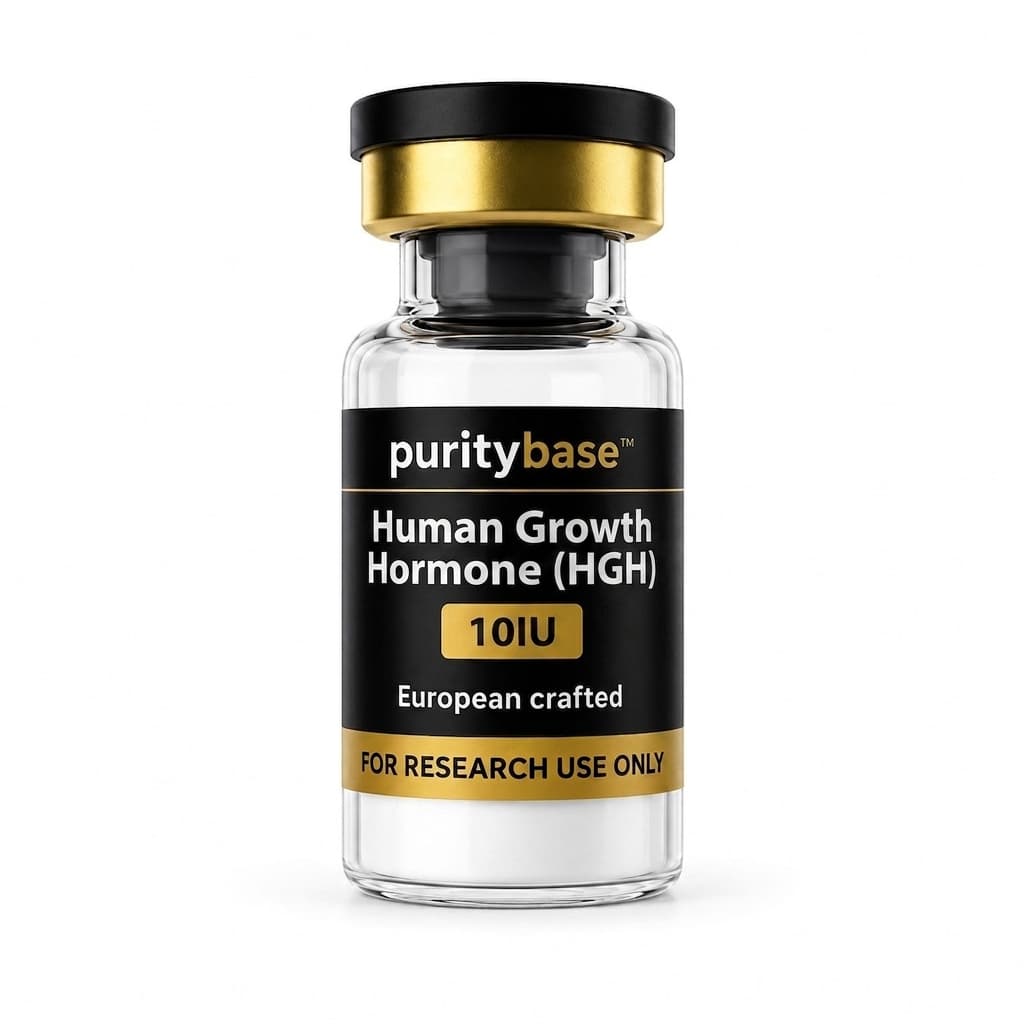
Human Growth Hormone (HGH) is a lyophilized peptide hormone of pituitary origin, produced here to rigorous laboratory standards and verified at ≥99% purity by HPLC. As a 191-amino-acid single-chain polypeptide with the molecular formula C990H1529N263O299S7 and a molecular weight of approximately 22,125 Da, it is one of the most extensively referenced compounds in endocrinological and metabolic biochemistry. This lyophilized presentation supports consistent handling, reliable reconstitution, and stable long-term storage in research settings.
Human Growth Hormone has been extensively studied in the context of cell proliferation, tissue regeneration, and anabolic signaling pathways. It has been investigated as a key mediator in growth factor cascades, particularly those involving IGF-1 and related downstream effectors. The literature references HGH in studies of protein synthesis mechanisms, metabolic regulation, and endocrine system modelling. In in vitro settings, recombinant HGH is commonly employed alongside other peptide ligands to map receptor binding kinetics and intracellular signaling responses.
HGH is supplied as a lyophilized powder and should be reconstituted with an appropriate volume of bacteriostatic water (BAC water) prior to use. Add the BAC water slowly along the inner wall of the vial and gently swirl until the powder is fully dissolved — do not shake, as vigorous agitation may degrade the peptide. Prepare solutions under aseptic conditions and keep the reconstituted vial cold at all times.
Store the lyophilized product refrigerated and protected from light and moisture. Once reconstituted, keep the solution refrigerated and use within a short timeframe to preserve biological activity. Avoid repeated freeze–thaw cycles.
| Concentration (iu) | 10iu, 10x10iu |
Our products have been tested by an independent laboratory. The corresponding test reports including test codes are publicly accessible.
View lab results