Order Before 14:00 = Shipped Today *

Your Cart
Your cart is empty
Continue Shopping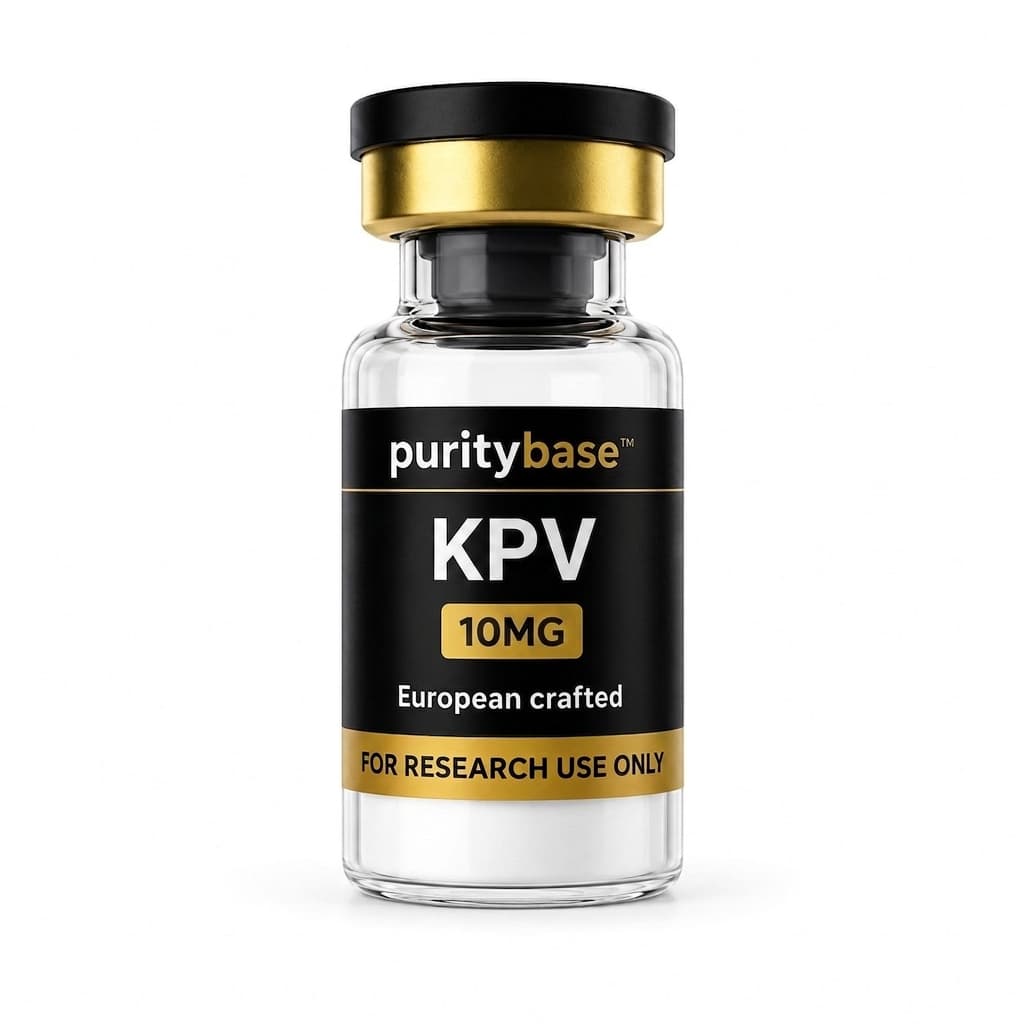
KPV is a synthetic tripeptide composed of lysine (K), proline (P), and valine (V), supplied as a lyophilized powder of ≥99% purity as verified by High-Performance Liquid Chromatography (HPLC). Derived from the C-terminal sequence of α-Melanocyte Stimulating Hormone (α-MSH), KPV is a well-characterised short-chain peptide with a molecular formula of C16H27N5O4 and a molecular weight of approximately 353.42 Da, produced under strict quality control protocols for use in controlled biochemical and cellular research environments.
KPV has been studied extensively in in-vitro and biochemical research settings for its relationship to inflammatory signalling pathways and immune modulation. It has been investigated as a model for short-chain peptide–receptor interactions derived from α-MSH and is referenced in the literature in the context of cytokine activity and immunoregulatory mechanisms. As a structurally defined tripeptide, it serves as a useful reference compound in molecular and cellular studies exploring peptide-mediated signalling functions.
KPV is supplied as a lyophilized powder and should be reconstituted with an appropriate volume of bacteriostatic water (BAC water) prior to use. Add the BAC water slowly and gently swirl the vial until the powder is fully dissolved — do not shake. Once reconstituted, handle the solution with care and maintain cold chain conditions throughout. Standard aseptic technique is recommended during preparation.
The lyophilized product should be stored refrigerated and protected from light and moisture. Reconstituted solution should be kept refrigerated and used within a short period following preparation to preserve integrity and activity in research applications.
| Concentration (mg) | 10mg |
| Bacteriostatic Water | 10ml, 3ml (included by default), None |
Our products have been tested by an independent laboratory. The corresponding test reports including test codes are publicly accessible.
View lab results