Order Before 14:00 = Shipped Today *

Your Cart
Your cart is empty
Continue Shopping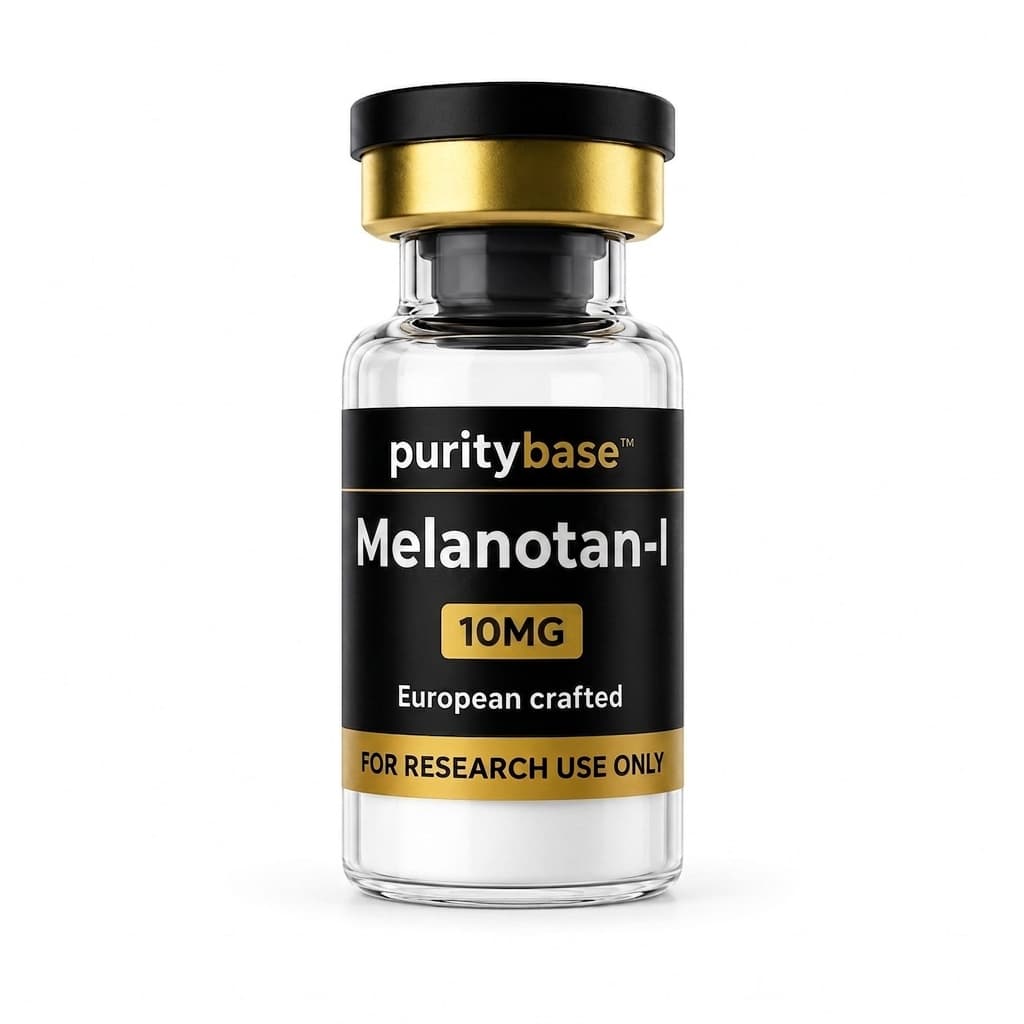

Melanotan-I (Afamelanotide) is a synthetic research peptide derived from α-Melanocyte Stimulating Hormone (α-MSH), presented as a lyophilized powder and verified by High-Performance Liquid Chromatography (HPLC) to a purity of ≥99%. Designed for controlled laboratory use, it offers researchers a precisely characterised tool for investigating melanocortin receptor biology and peptide-based signalling models.
Melanotan-I has been studied extensively in the context of melanocortin receptor activation, with particular focus on the MC1R subtype. In in-vitro models, it has been investigated as a means of probing pigmentation signalling pathways, oxidative stress responses, and downstream signal transduction cascades associated with melanocortin system engagement. The compound has also been referenced in the literature in pharmacological receptor studies examining peptide-mediated cellular responses under controlled biochemical conditions.
Melanotan-I is supplied as a lyophilized powder and should be reconstituted with an appropriate volume of bacteriostatic water (BAC water) prior to use. Add the BAC water slowly along the inner wall of the vial, then gently swirl — do not shake — until the powder has fully dissolved. Avoid vigorous agitation, which may compromise peptide integrity. Handle all reconstituted solutions on ice or at refrigerated temperatures and use clean technique throughout.
The lyophilized product should be stored in a cool, dry environment — ideally frozen — and protected from light and moisture. Once reconstituted, the solution should be kept refrigerated at 2–8 °C and used within a short timeframe to preserve activity and prevent degradation. Repeated freeze-thaw cycles of the reconstituted solution should be avoided.
| Concentration (mg) | 10mg |
| Bacteriostatic Water | 3ml (included by default), 10ml, None |
Our products have been tested by an independent laboratory. The corresponding test reports including test codes are publicly accessible.
View lab results