Order Before 14:00 = Shipped Today *

Your Cart
Your cart is empty
Continue Shopping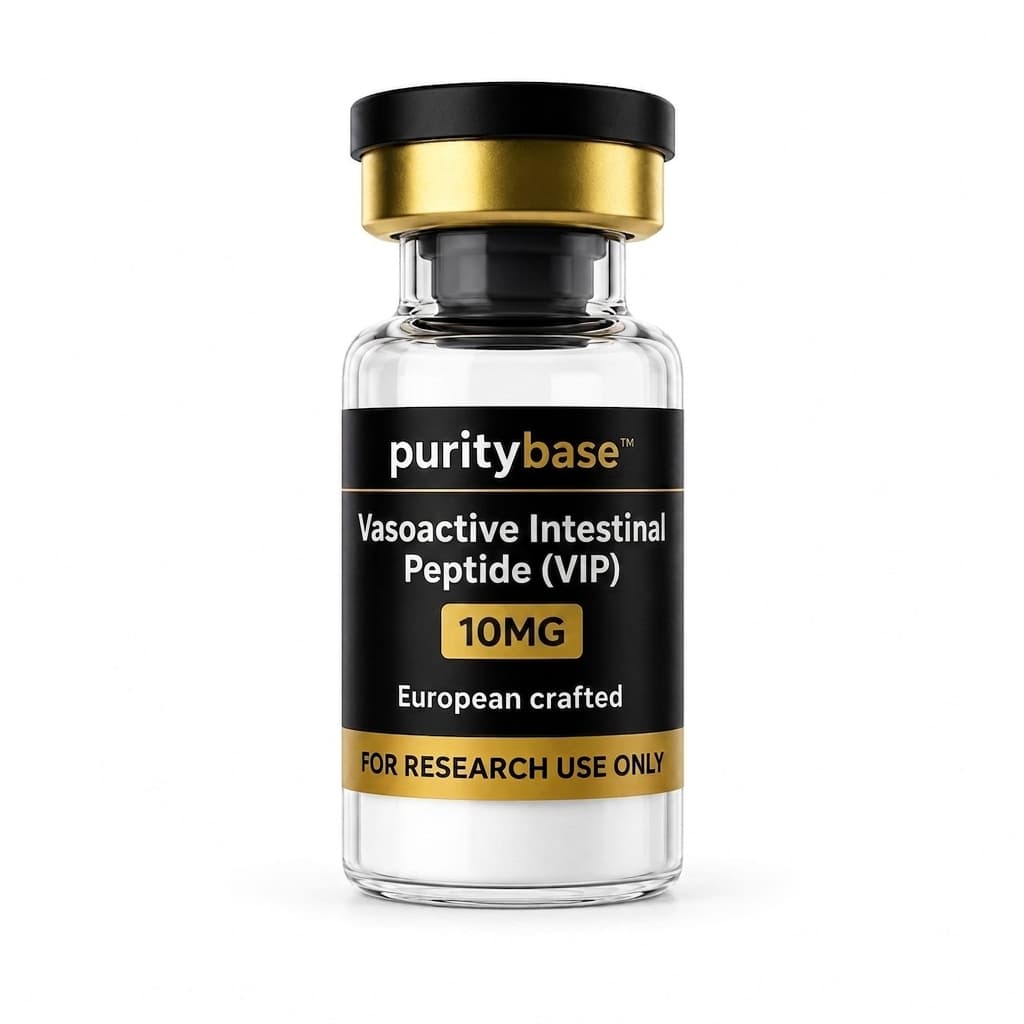
Vasoactive Intestinal Peptide (VIP) is a synthetic 28-amino acid peptide supplied as a lyophilized powder of ≥98% purity (HPLC verified). With a molecular formula of C147H237N43O42 and a molecular weight of 3325.74 Da, it is a well-characterised reference compound used across preclinical and in-vitro research disciplines involving neuroendocrine signalling, vascular modulation, and receptor-mediated cellular communication.
VIP has been extensively studied in the context of neuropeptide signalling, acting via the VIPR1 and VIPR2 receptor subtypes. It has been investigated as a model compound for understanding receptor-mediated signal transduction and cyclic AMP pathway activation. The literature references its use in preclinical settings examining vasodilatory mechanisms, neuro-immunological communication, and the regulation of secretory and smooth-muscle functions. Its defined sequence and high purity make it a reproducible tool for controlled in-vitro receptor-binding and functional assays.
The lyophilized powder is reconstituted with an appropriate volume of bacteriostatic water (BAC water). Add the BAC water gently to the vial and swirl slowly until the powder is fully dissolved — do not shake, as this may cause peptide degradation. Prepare solutions under aseptic conditions. Once reconstituted, handle the solution with care to preserve stability.
Store the lyophilized product in a cool, dry location, protected from direct light and moisture. For longer-term storage, keeping the vial frozen is recommended. Once reconstituted, store the solution refrigerated (2–8 °C) and use within a short timeframe to maintain integrity and activity. Avoid repeated freeze-thaw cycles.
| Concentration (mg) | 10mg |
| Bacteriostatic Water | 10ml, 3ml (included by default), None |
Our products have been tested by an independent laboratory. The corresponding test reports including test codes are publicly accessible.
View lab results